10 Tools, Zero Flow: How a NYC Nonprofit Rebuilt Its Operations on Airtable and Make
A NYC performing arts nonprofit was running its operation across 10+ disconnected tools. Here's how they automated proposals, invoicing, and client intake.
Industry: Performing Arts / Nonprofit | Size: ~20-person organization, New York City | Problem cluster: Disconnected systems & manual operations | Tools used: Airtable, Notion, Make, Fillout, Xero, Constant Contact
The problem
When the operations manager at this NYC-based Mexican folk dance company joined full-time, she inherited a system that wasn't really a system. The organization had grown through years of improvisation: a Google Sheet for tracking who had paid, a separate Google Sheet for class rosters, Constant Contact for email campaigns, Square for point-of-sale, Mindbody for class scheduling, BeyondPay for payroll, Artspool for insurance, Xero for accounting, Grasshopper for the main phone line, and Notion for internal documentation. Ten tools. None of them talking to each other.
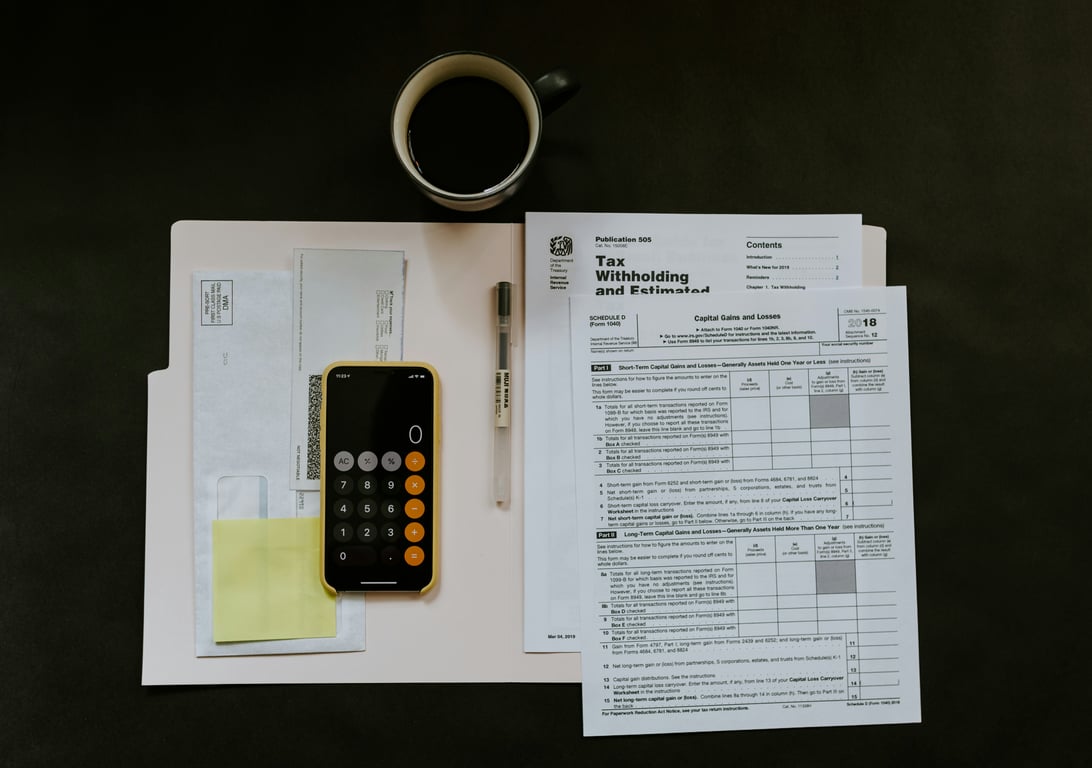
Photo by Jakub Żerdzicki on Unsplash
Every invoice was manually typed in Google Docs and tracked in a spreadsheet. When a new student or corporate client submitted an inquiry, someone had to copy the details across to four different places. Following up on unpaid invoices meant scanning a spreadsheet and writing individual emails. The executive director, a co-founder with 21 years in the organization, was personally touching administrative workflows that no founder should have to touch.
The organization had just completed a strategic plan with a single stated goal: "be more efficient and sustainable." They had secured a grant to fund an operations improvement project, with a hard June 30 deadline to show results. They needed to consolidate, automate, and deliver something their funders could point to.
Why this was harder than it looked
The accounting system had a quirk that made automation unusually tricky: it could not easily hold multiple contacts for the same organization. When the team built the first version of the Airtable-to-accounting automation, where proposal acceptance would auto-create a client and send an invoice, it created duplicate contact records whenever an organization had multiple staff members. A company with both a director and an office manager would show up twice, and the automation would fail or misfire on subsequent runs.
The Connex consultant spent two full sessions specifically on this edge case: designing an error handler that would check whether the organization already existed, and if so, add the new contact as a secondary contact rather than creating a duplicate entity. It took deliberate, non-obvious Make scenario logic to thread that needle cleanly. The kind of thing that looks minor in a project plan but kills automation reliability in production.
What was built
Over 42 paid ZoomFlow sessions spanning roughly nine months, the Connex team built a centralized operations hub in Airtable with four interconnected workflows:
Inquiry-to-proposal pipeline. Inquiry form submissions land directly in Airtable, creating a structured client record. A proposal is generated from that record without anyone retyping data. When the prospect accepts, the record moves to the next stage automatically.
Invoice creation and tracking. Once a proposal converts, a Make automation creates the invoice in the accounting system directly from the Airtable record, including the contact error-handling logic. Payment status syncs back to Airtable so the team always sees current receivables without opening a separate system.
Contact list segmentation. Form submissions for events, volunteer sign-ups, and class inquiries now route automatically to the correct email list based on form type. Volunteers go to the volunteer list; class inquiries go to the student list. No manual sorting or export-import cycle.
Payroll data pipeline (in progress). Early work began on routing payroll inputs from Airtable to the payroll system, the first step toward removing the manual bridge between scheduling and payroll processing.
Estimated impact
📊
These are estimates based on documented session outputs and client-reported workflows, not independently audited figures.
Invoice workflow time saved. The organization was creating invoices manually in Google Docs and tracking them in a spreadsheet. Estimated pre-automation time per invoice: approximately 20 minutes of staff action (draft, format, send, log, follow up). With the Airtable-to-accounting automation, this drops to under 2 minutes. At an estimated 8 to 12 invoices per month, that is roughly 2 to 3 hours of administrative time recovered monthly.
Inquiry handling time saved. Manual intake, copying contact data across four tools, was estimated at 15 minutes per new inquiry. The centralized form-to-Airtable intake eliminates that redundant data entry. At approximately 15 to 20 new inquiries per month, that is another 3 to 5 hours of staff time per month no longer spent re-entering the same information.
Email list accuracy. Before automation, contact lists were updated manually, which meant they were frequently out of date or missing recent sign-ups. Contacts now appear in the correct list within minutes of form submission rather than days.
Total estimated time recovery: roughly 6 to 8 hours of administrative staff time per month. For a nonprofit where every hour counts toward mission delivery, that time is now available for program work instead of data entry.
The engagement model
The organization worked with Connex through the ZoomFlow model, buying sessions in blocks and booking them when they were ready to move specific pieces forward. This matched the rhythm of a small nonprofit with lean staff: work happened in focused bursts rather than on a continuous retainer. Over nine months, they ran 42 paid sessions. The same Connex consultant worked the engagement throughout, which meant institutional knowledge about the accounting system quirks and the contact data model did not have to be rebuilt session to session.
Grant compliance was an explicit project requirement. The June 30 deadline was a funder deadline, not a preference. Having a structured working method, each session with a defined output documented in Airtable, made it possible to show the funder exactly what was built and when.
What it looks like now
The organization replaced the patchwork of ten-plus manual handoffs with a single Airtable-centered system. An inquiry arrives, it becomes a record, it becomes a proposal, it becomes an invoice, and payment status updates back automatically. New contacts from forms reach the right email lists in minutes. The executive director is no longer the person who knows where invoices are tracked.
The project is ongoing, with payroll integration next, but the core operational cycle is automated. For a 21-year-old performing arts nonprofit that runs on mission energy and lean staff, that is the infrastructure that lets it keep growing without adding headcount.
Ready to simplify your operations?
If your organization is running on a collection of disconnected tools with manual handoffs between them, the problem is not any single tool. It is the gaps between them. Book a free consultation and build one automated workflow from end to end.
A US process-server firm re-entered every job into three systems by hand. Two Zaps fixed it: ServManager to QuickBooks invoices and bills, automatically.