Food Truck Inventory Reconciliation with Airtable and Make
Food truck inventory reconciliation for a multi-truck bagel business: Airtable and Make track ordered, received, sold, and leftover bagels daily. See the build.
TL;DR: A bagel business with fewer than 50 staff, selling from a fleet of food trucks, could not say where its bagels went between the bakery order and the end of a shift. Connex built a food truck inventory reconciliation system in Airtable and Make that lines up four numbers for every product, truck, and day (ordered, received, sold, left over), flags the gap automatically, and checks every bakery receipt against what was actually ordered.
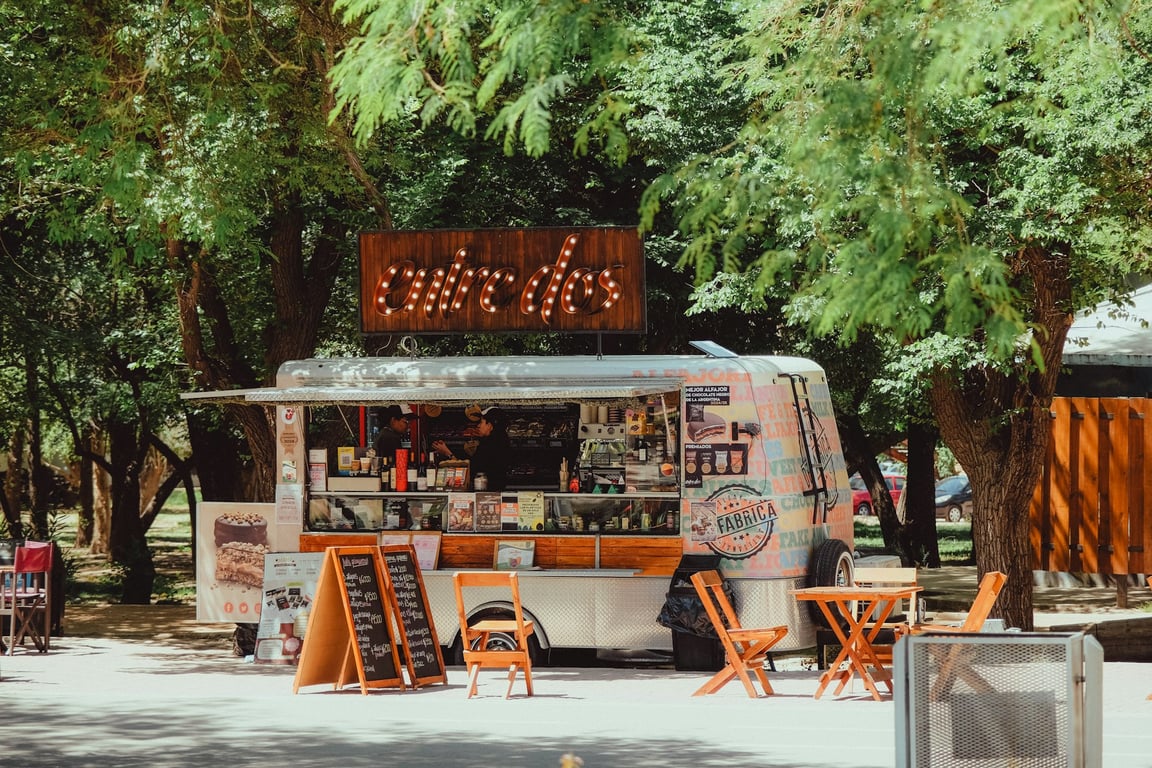
The company sells bagels from several trucks that rotate between neighborhoods on a weekly schedule, plus delivery orders through Uber Eats and DoorDash. Point of sale runs on Square. A wholesale bakery bakes to order every day, and the trucks track roughly 14 product lines, from plain dozens to specialty items.
Orders to the bakery went out as one long text message. Inventory counts lived in forms and a spreadsheet. Sales sat in three separate platforms. None of it connected.
The problem, in their words
The operator was clear about what mattered. "The primary goal of this is to get the bagel COGS under control," he said on the kickoff call. He described the report he wanted at the end of each day: "We ordered 10 bagels. We started with 10. We sold 5." And then the question nobody could answer: "What happened to the other bagel? The variance."
Without that number, waste, shrinkage, and bakery billing errors all looked the same.
What they'd already tried
Before calling Connex, the operator had built the first pieces himself: a Jotform feeding Airtable, AI-written formulas, and Zapier sending orders out by SMS and writing replies back. It mostly worked, but one AI prompt step inside a Zap was, in his words, "driving me crazy," and the discovery notes projected a Zapier task volume in the tens of thousands once every truck was live. He wanted to know whether it was smarter to get help automating the whole process than to keep patching it.
What we built: food truck inventory reconciliation
A Connex consultant rebuilt the process across live ZoomFlow sessions, inside accounts the business owns, so every connection and login stays with the company.
Bakery orders with a one-click confirmation. An order form creates one order with line items grouped by location. Make sends the bakery an email and a text with the full order, and the baker confirms with a link instead of replying "Y." Every order also posts to a dedicated Slack channel.
Morning and end-of-shift counts. A single inventory form records counts by truck, product, and time of day, and creates all the line records in one pass.
Sales mapped to the right truck. Square sales flow into Airtable. Because trucks move, a schedule table maps each truck number and day of the week to the location it actually worked. Uber Eats and DoorDash feeds were wired up as the next step, pending production API access from those platforms.
Automatic reconciliation. Submitting the end-of-day count triggers a full reconciliation: beginning inventory plus orders, minus sales, against ending inventory, by product and location. Mismatches surface in an Airtable interface and as alerts.
Bakery receipt checks. In a second phase, bakers get a prefilled receipt link by text. OCR reads the receipt and payment images, the system compares billed quantities to ordered quantities, and discrepancies go to Slack and SMS.
Waste views. A calendar dashboard shows wasted bagels by day and week, grouped by location, and the system alerts when a location's daily count is missing.
The results
The business now gets the report the operator described on day one: ordered, received, sold, and left over for each product at each truck, every day, without anyone building it by hand.
Variance is a number, not a guess. Leftovers and shortfalls show up per truck and per product, so over-ordering patterns and shrinkage can be tracked separately.
Bakery billing is verified. As the operator put it while testing: "Are they billing us for a thousand? Did we receive a thousand?" Every receipt now answers that automatically.
Orders are confirmed, not assumed. The baker's click is recorded against the order, which replaced a thread of texts nobody could audit.
We haven't put a dollar figure on this one. The client didn't share daily volumes or per-task times, and we don't invent them. The value here is visibility into cost of goods that previously had none.
Client voice
Asked to swap the bakers' reply-by-text for a confirmation link, the operator worried about bakers used to one long text a day. Once it was clear only the confirmation step changed: "A click instead of a respond. Okay with that, if it works, if it's easier."
FAQ
Will this work with our point-of-sale and delivery apps?
Square connected directly. Uber Eats and DoorDash support webhooks and APIs, but both require production access approval, so plan for that step early.
How fast was the first measurable win?
The order-to-bakery workflow, with SMS confirmation and Slack posting, was tested within the first week. Reconciliation followed about five weeks in.
What access did it need?
Logins for the tools the business already used or opened for the project (Airtable, Make, Jotform, Twilio, Slack, Square), shared through an encrypted form. Everything was built in the client's own accounts.
Get help reconciling your inventory
Reconciliation usually breaks where orders, counts, and sales live in different tools and nobody owns the gap between them. If that sounds like your operation, book a ZoomFlow session. One of our consultants will map where your numbers split apart and build the reconciliation with you live, in accounts you own.
ServiceTitan to Smartsheet sync built in Zapier for a 50-person plumbing and HVAC contractor: from a projected 1,500 tasks a day to 1 to 3 per run. See how.
A Google Ads agency for home-services firms swapped fragile Zapier lookups for Make + Airtable lead-to-revenue matching across four CRMs. See how it works.
An HVAC company lost in-app card processing. Zapier now sends ServiceTitan customers and invoices to Stripe as drafts, ready to charge, with no re-typing.